
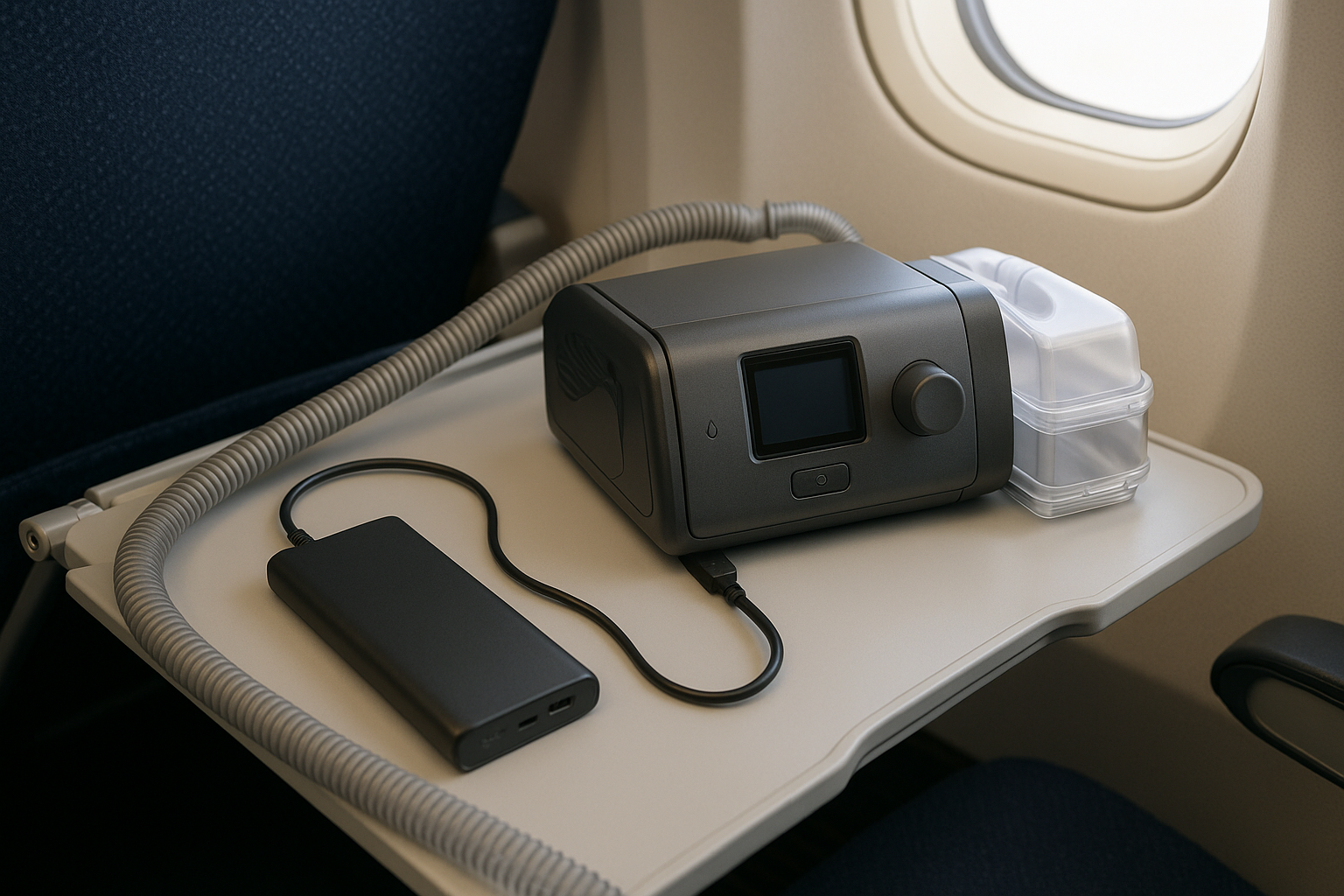
For many individuals living with sleep apnea, their CPAP (Continuous Positive Airway Pressure) machine is an essential part of their daily health regimen. When travel beckons, especially by air, questions naturally arise about bringing and using these vital devices. The good news is that flying with your CPAP machine is generally allowed, but understanding specific airline policies and power considerations is crucial for a smooth journey.
Is Your CPAP Machine Allowed on a Plane?
Yes, CPAP machines are universally recognised as medical devices and are typically permitted as an additional carry-on item beyond your standard hand luggage allowance. This is a significant advantage, as it ensures your essential medical equipment stays with you and is less likely to be lost or damaged.
Important Note: Always pack your CPAP machine in a separate bag or its designated travel case. Mixing it with personal items in a standard carry-on could lead to it being counted towards your regular baggage allowance, potentially incurring fees or requiring it to be checked into the hold (which is highly discouraged for medical devices).
Using Your CPAP Machine Onboard: Powering Up in the Sky
This is where things can get a little more complex. While you can almost always carry your CPAP machine, using it during the flight depends heavily on the airline’s policy and the availability of in-seat power.
Onboard Power Supply: Most airlines do not guarantee an onboard power supply for passenger medical equipment. Even if a seat appears to have a power outlet, its wattage may be insufficient for your CPAP machine, or it may not be operational throughout the flight. Therefore, relying solely on aircraft power is not advisable.
The Essential Solution: CPAP Batteries For uninterrupted therapy during your flight, a CPAP battery is almost always a necessity. These portable power sources allow you to operate your machine independently of the aircraft’s power grid.
CPAP Batteries on Airplanes: What You Need to Know
CPAP batteries, particularly those containing lithium-ion cells, are subject to strict regulations due to their potential fire risk.
- Carry-on Only: All lithium-ion batteries, including those for CPAP machines, must be carried in your hand luggage. They are strictly forbidden in checked baggage due to the risk of uncontrolled thermal runaway in the cargo hold.
- Watt-Hour (Wh) Limits: The primary limitation for lithium-ion batteries is their Watt-hour (Wh) rating.
- Up to 100 Wh: Batteries with a Watt-hour rating of up to 100 Wh are generally allowed without special airline approval, though it’s always best to notify the airline in advance. Many popular CPAP travel batteries are specifically designed to be just under this limit (e.g., 98 Wh) to ensure compliance.
- 101 Wh to 160 Wh: Batteries in this range require airline approval and are typically limited to a maximum of two spare batteries per passenger. You will need to contact the airline’s special assistance department well in advance to obtain this approval.
- Over 160 Wh: Batteries exceeding 160 Wh are generally not permitted on passenger aircraft.
- Protection from Short Circuit: Spare batteries must be individually protected from short circuits. This means placing them in their original retail packaging, taping over exposed terminals, or placing each battery in a separate plastic bag or protective pouch.
- Documentation: It’s highly recommended to carry a letter from your doctor confirming your need for the CPAP machine and stating that it is a medical device. If you are using a battery, the letter should also confirm this and its specifications (especially if it’s over 100 Wh). Having the original letter you received with your machine can also be helpful.
Long Haul vs. Short Haul: Any Differences?
While the regulations for carrying CPAP machines and batteries are generally consistent across all flights (due to international aviation safety standards), the practical implications differ:
- Short Haul: For shorter flights, the primary concern is usually just bringing the machine on board. You may not feel the need to use it during a brief journey, especially if you have an alternative for that period (e.g., napping without it). If you do need to use it, a fully charged battery is essential as in-seat power is even less likely on short-haul flights.
- Long Haul: On longer flights, using your CPAP machine is often crucial for maintaining your therapy and ensuring restful sleep. This makes a reliable battery even more vital. Some long-haul aircraft may have in-seat power, but as stressed, it’s never guaranteed or sufficient for all CPAP models.
Major UK Airlines: Specific CPAP Policies
Crucial Advice for All Airlines: Always contact your specific airline’s Special Assistance team well in advance of your travel date (ideally at the time of booking, or at least 48-72 hours before departure). Policies can change, and getting pre-approval and specific guidance for your machine and battery is the safest approach.
Here’s a breakdown of common policies for major UK airlines, based on current information:
- British Airways:
- Carriage: CPAP machines are generally permitted as an additional piece of hand baggage free of charge. No medical clearance is typically needed to travel with or use a CPAP.
- Usage Onboard: If you wish to use it onboard, BA recommends carrying a dry cell battery. While some seats may have an in-seat power supply, the maximum output is often 75 watts, which may be insufficient for some CPAP machines (especially if using a humidifier or heated tube). BA cannot guarantee power availability.
- Batteries: Dry cell batteries are recommended. Adhere to the general lithium-ion battery rules (under 100Wh preferred, over 100Wh with approval and limits).
- Virgin Atlantic:
- Carriage: CPAP machines are allowed onboard and do not count towards your hand baggage limit. They must be labelled by the manufacturer confirming compliance with UK Government or US FAA medical portable device requirements.
- Usage Onboard: CPAP machines can be used onboard, provided they are battery-operated and approved for use onboard. They explicitly state that medical devices cannot be plugged into their onboard power supply.
- Batteries: You must carry sufficient fully-charged batteries to power the device for 150% of the expected maximum flight duration (to account for delays). Spare batteries must be packaged according to UK safety regulations (preventing short circuits).
- easyJet:
- Carriage: If you wish to carry or use a Special Medical item onboard, you need to contact easyJet to determine if your request can be approved and to receive authorisation.
- Usage Onboard: Requires prior authorisation. Check with them for specifics, as their general medical equipment guidance suggests “any medical equipment that may be considered as dangerous goods in the aircraft cabin” needs checking.
- Batteries: Standard lithium-ion battery regulations apply. Always check with them due to their stricter pre-authorisation process.
- Ryanair:
- Carriage: CPAP machines can generally be carried in the cabin without prior notification if they fit within your cabin baggage allowance. If the device is in addition to your baggage allowance, you must obtain a “medical baggage waiver letter” by contacting their Special Assistance team in advance.
- Usage Onboard: Ryanair generally states that CPAP machines are NOT permitted for use onboard. This is a significant difference from other airlines.
- Batteries: Allowed as per standard lithium-ion regulations but if usage is not permitted, the battery’s primary function for flight use is diminished.
- Jet2:
- Carriage: You can carry your CPAP machine, in addition to your hand luggage, free of charge. You should bring a letter from your GP and the original letter received with the machine.
- Usage Onboard: CPAP machines cannot be used at take-off, during the flight, or landing. This implies no inflight use.
- Batteries: Allowed as per standard lithium-ion regulations, but again, if inflight use is prohibited, the battery’s purpose for flight time is limited.
- TUI Airways:
- Carriage: Portable electronic medical equipment (including CPAP) can be transported with a medical certificate and prior airline approval. They explicitly state medical overweight items can be allowed as carry-on or in the hold free of charge, subject to a medical certificate.
- Usage Onboard: There is no power supply onboard, so these devices must be battery-powered. Prior airline approval is required for use.
- Batteries: Lithium-ion batteries for medical use are permitted, with no more than two spare batteries. Spare batteries must be individually protected.
Security and Boarding Tips:
- Arrive Early: Allow extra time at security, as your CPAP machine will likely need to be removed from its case and screened separately (often requiring an X-ray and sometimes a swab).
- Medical Documentation: Have your doctor’s letter, prescription, and any airline approval emails easily accessible.
- Inform Crew: When boarding, briefly inform the cabin crew if you intend to use your CPAP machine, even if pre-approved.
By being well-informed and prepared, you can ensure your CPAP therapy continues seamlessly, no matter how far your travels take you. Safe and restful travels!